How AI Can Reduce Scut Work in Indian Hospitals — A Deep Dive into Automation with NICE-HMS
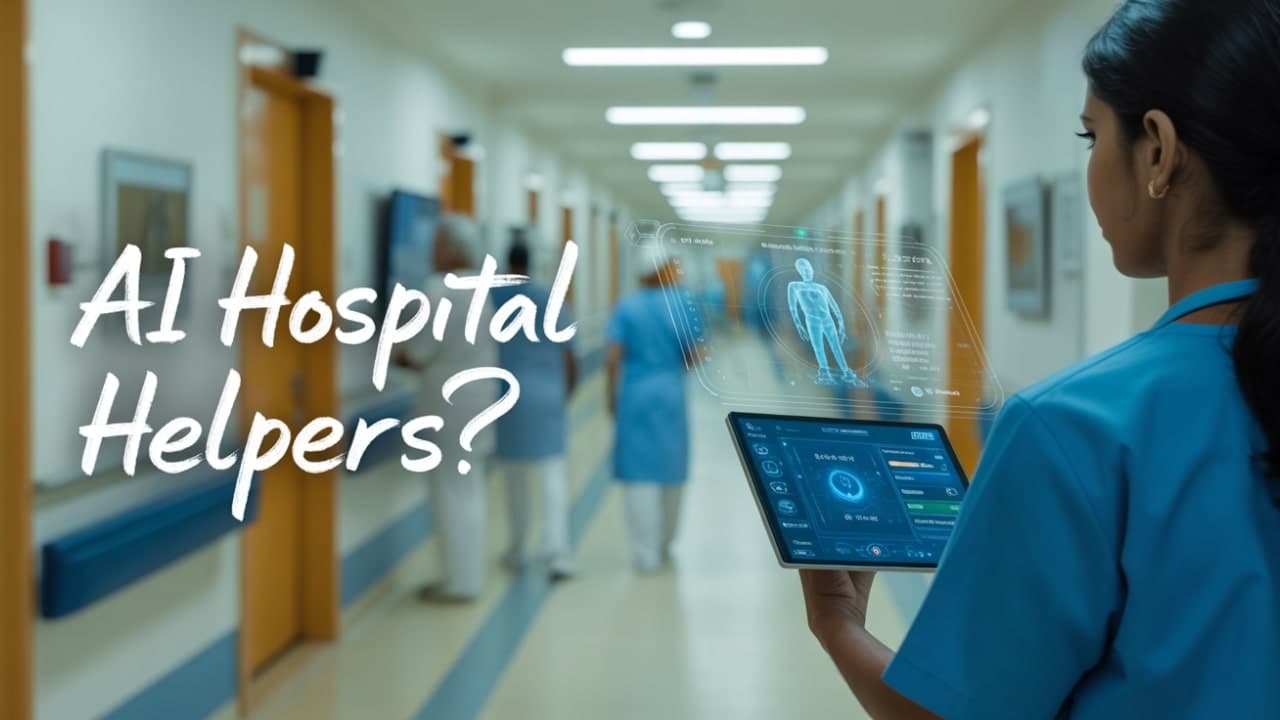
Abstract
Indian hospitals face massive administrative burdens, with doctors, nurses, and staff spending valuable time on repetitive paperwork. AI and NICE-HMS dramatically reduce this scut work by automating discharge summaries, radiology reporting, and lab data entry, while improving accuracy and workflow speed. Integrated LIS systems, NHCX-based insurance automation, OCR, and AI validation streamline claims processing. AI chatbots, voice agents, and WhatsApp automation simplify patient engagement, while smart reminders enhance follow-up care. Predictive analytics optimize hospital operations. With human supervision, AI becomes a powerful assistant—cutting workload, minimizing errors, and enabling clinicians to focus on real patient care.Namaste Dosto!
Indian hospitals are full of hard-working doctors, nurses, house surgeons, and administrative staff — but along with real patient care, there is also a mountain of scut work or hospital hustle that consumes time and drains energy.
From writing discharge summaries to filling lengthy insurance forms, from chasing radiology reports to manually typing lab values — the burden is immense. The question is:
Can AI really reduce this load?
Can we automate a large part of hospital paperwork?
Is AI mature enough for real-life use in India?
Let’s explore how NICE-HMS and modern AI tools can transform Indian healthcare by reducing repetitive tasks and improving productivity.
1. The Reality of SCUT Work in Indian Hospitals
Walk into any Indian hospital or medical college and you’ll see:
-
House surgeons writing discharge summaries all day
-
Junior doctors re-typing rounds and case sheet notes
-
Staff chasing reports for filing
-
Radiologists typing long reports manually
-
Lab technicians entering values by hand
-
Billing teams uploading insurance documents one by one
This work is essential — but it is repetitive, error-prone, and time consuming.
AI now gives us an opportunity to eliminate 60–80 percent of this workload.
2. Automated Discharge Summary Generation (Speech-to-Text + AI)
Discharge summary writing is mostly a data entry exercise:
-
Lab values
-
Vitals
-
Daily round notes
-
Treatment details
-
Investigations
With NICE-HMS and AI:
Automatic Data Pulling
EMR entries, labs, vitals, and medications are auto-fetched into the summary.
Speech-to-Text for Clinical Narration
Doctors can simply speak:
-
History
-
Examination findings
-
Opinions
-
Final advice
NICE-HMS converts it into a grammatically correct, formatted, clear medical document.
Consultant Finalization
Consultant reviews the AI-generated summary, adds advice, and approves.
Accuracy improves, grammar improves, and time reduces drastically.
AI becomes a productivity booster, not a replacement.
3. Radiology Reporting Automation with Speech-to-Text
Radiology departments are ideal for AI automation because reports are text-heavy.
Common use-cases:
-
CT Scan
-
MRI
-
Ultrasound
-
Mammography
-
Endoscopy
-
Echocardiography
-
Angiography
How AI Helps:
-
Load Template
Radiologist selects the pre-defined template for the modality. -
Speak Only Abnormal Findings
Speech-to-text fills the correct sections automatically. -
AI Generates the Impression
A coherent, structured report is produced. -
Radiologist Reviews and Edits
Final authority remains with the clinician.
At NICE-HMS partnered hospitals, radiologists are already using this method and saving hours every day.
4. Lab Machine Integration (LIS to EMR) Using AI
Most modern analyzers — Siemens, Beckman, Roche, Sysmex and others — support digital integration.
With NICE-HMS LIS:
Automatic Report Transfer
CBC, LFT, KFT, biochemistry, and other panels are pushed directly into EMR.
Zero Typing Errors
No more misplaced decimal points.
No manual typing by technicians.
AI-Based Abnormal Value Alerts
AI highlights:
-
Out-of-range values
-
Critical alerts
-
Sudden trends
-
Clinically important abnormalities
This reduces clinical risk and speeds up decision-making.
5. AI for Insurance Claims (NHCX, OCR, and Automation)
Indian insurance claims are still mostly manual:
-
Scanning bills
-
Uploading documents
-
Sending multiple queries
-
Waiting 1 to 2 days for approval
With NHCX (National Health Claim Exchange) and NICE-HMS:
Auto-Scanning and OCR
Bills, discharge summaries, case sheets — automatically read by AI.
Faster TPA Upload
AI attaches documents without human effort.
Claim Validation
Missing data or inconsistencies flagged before submission.
Future-Proof
As NHCX becomes fully functional nationwide, claims will become faster, paperless, and real-time.
AI will play a major role in streamlining India’s insurance workflows in the coming year.
6. AI Chatbots, Voice Agents and WhatsApp Automation
Appointment booking and patient communication can be fully automated.
AI Chatbots (Website or App)
Patients can:
-
Ask for appointments
-
Check doctor availability
-
Request reports
-
Clarify basic doubts
Voice Agents
Using conversational AI, patients can speak in any Indian language and get:
-
Appointments
-
Basic instructions
-
OPD timings
-
Reminders
Voice agent costs are dropping rapidly, making them viable for medium hospitals.
WhatsApp Appointment System in NICE-HMS
With one click:
-
Patients book appointments
-
Get reminders
-
Receive digital receipts
-
Download reports
WhatsApp plus AI becomes the easiest interface for Indian patients.
7. Automated Follow-Up, Vaccination and ANC Reminders
AI monitors the patient’s EMR data and automatically sends:
-
Post-surgery follow-up reminders
-
Antenatal care schedule
-
Immunization reminders
-
Medication reminders
-
Chronic disease follow-up
This improves compliance and reduces complications.
8. AI for Hospital Operational Efficiency
AI can analyze historical and real-time data to predict:
-
OPD rush hours
-
Consultant-wise patient flow
-
OT workload
-
Bed occupancy patterns
-
Staffing requirements
-
Seasonal case surges
Hospitals can reallocate staff and manage resources proactively.
9. Challenges and Considerations
AI is powerful, but:
-
It is probabilistic, not deterministic
-
Accuracy varies by scenario
-
Human supervision is essential
-
Ethical and legal frameworks must be respected
-
Data privacy and compliance (ABDM, NDHM) must be ensured
Yet AI already performs near-human or better-than-human in many tasks.
It is not meant to replace doctors — but to assist them.
10. Conclusion — Will AI Reduce Scut Work in India?
Yes.
AI will:
-
Reduce paperwork
-
Improve accuracy
-
Speed up processes
-
Minimize errors
-
Allow junior doctors to learn, not just type
-
Improve patient care
-
Streamline the entire hospital workflow
AI and doctor together are the future of efficient, safe, and patient-friendly healthcare.
We are already seeing this transformation with NICE-HMS.

Dr Umesh Bilagi
Founder CEO of Nice HMS, reshaping healthcare management. MD DM in cardiology, with 2 private hospital launches and impactful government tenure. Fusing medical expertise and tech for superior care is my mission.
This Unlock the Future of Healthcare Management! 🚀🏥🌟
Is managing your hospital, clinic, or lab becoming a daunting task? Experience the ease and efficiency of our cutting-edge Management Software through a personalized demo.